For 15 years, I was a thriving teacher… until neurodivergent burnout completely changed my life. I had excellent results, strong bonds with my students, and outstanding observations. I even trained other teachers. But then I switched jobs to a large, dedicated A-level centre in the city, and everything changed.
That move didn’t just shift my career path; it triggered a massive episode of neurodivergent burnout that I am still navigating today. I didn’t realize that neurodivergent burnout was different from typical workplace stress…
The consequences of the Invisible Load on neurodivergent burnout
On paper, I was the Head of Year 12. In reality, I was drowning in a sensory nightmare. My days were split between teaching and management—dealing with student attendance, discipline, and constant interruptions from staff. The environment was so chaotic and full-on that I physically couldn’t concentrate.
To get my “in-depth work” done—lesson planning, audits, observation and teaching file, performance management reports etc —I had to retreat to the only quiet place I had: my home.
I would leave the house at 6 AM and often wouldn’t return until 9:30 or 10 PM. I spent 3 hours a day sitting in frustrating city traffic, only to come home and start my “second shift” of admin work because my brain hadn’t been able to focus all day in the noise of the college.
The Crash
I did this for two years until, eventually, I just couldn’t do it anymore. I took time off for stress, but I never made it back completely. Even now, the idea of teaching creates a physical feeling of trauma in me. It wasn’t that I couldn’t teach—I was good at it—but I couldn’t survive the environment.
I didn’t know it then, but this wasn’t just “stress.” It was a biological mismatch between my brain and my environment. One thing to remember from this story is that, recovery from neurodivergent burnout takes time and patience. Upon this realisation, I left teaching and this is why I started The Dopamine Hub.
🎧 Too tired to read? Listen to the Deep Dive podcast
If you are currently in the thick of burnout, reading a long article might feel impossible. I’ve generated this audio overview to explain the science behind why your brain feels this way and how sensory overload contributes to the crash.
The Science Bit: Understanding AuDHD & Sensory Overload
If my story sounds familiar, you are not alone. If you think you are struggling with neurodivergent burnout, know that you are not alone.”Whether you are a student unable to concentrate in a lecture hall or a professional finding the open-office plan unbearable, the root cause is often the same: the link between AuDHD (Autism + ADHD) and sensory processing.
What is AuDHD?
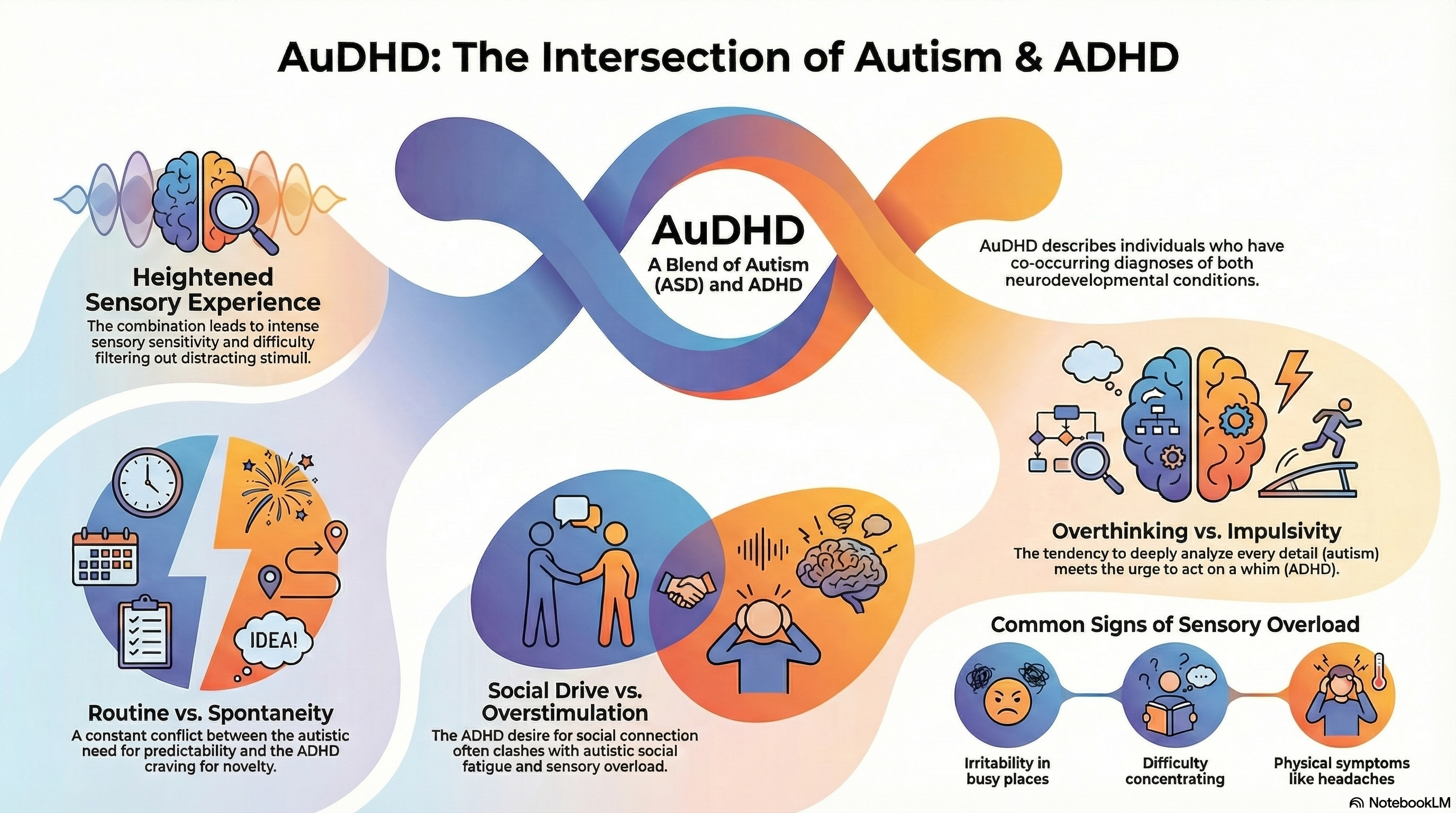
AuDHD is a term used to describe individuals who have both autism (ASD) and attention-deficit/hyperactivity disorder (ADHD). Because autism and ADHD can affect sensory processing in different ways, having both conditions at the same time can lead to heightened sensory sensitivity and significant challenges in filtering out unnecessary stimuli from the environment.
What is Sensory Overload and what impact does it have on Neurodivergent burnout?
Sensory overload occurs when your brain receives more sensory input—sights, sounds, smells, textures—than it can effectively process.
For individuals with AuDHD, this means that everyday environments like classrooms or offices can quickly become overwhelming. This leads to feelings of discomfort, distress, and eventually, burnout.
How Sensory Processing Differs in AuDHD
The combination of ASD and ADHD creates a unique sensory profile. Here is how it breaks down:
- Sensory Sensitivity: You may experience extreme sensitivity to lights or sounds (Autism) while simultaneously having difficulty ignoring background distractions (ADHD).
- Response to Stimuli: You might need to “stim” (fidget, rock) to regulate, but struggle with impulsive reactions to sudden noises.
- Overload Triggers: It’s the combination of the two—unexpected loud noises plus the need to multitask—that makes sensory overload more frequent and intense.
Recognizing the Signs of Neurodivergent Burnout
Neurodivergent burnout doesn’t happen overnight. It happens when we ignore these signs for too long:
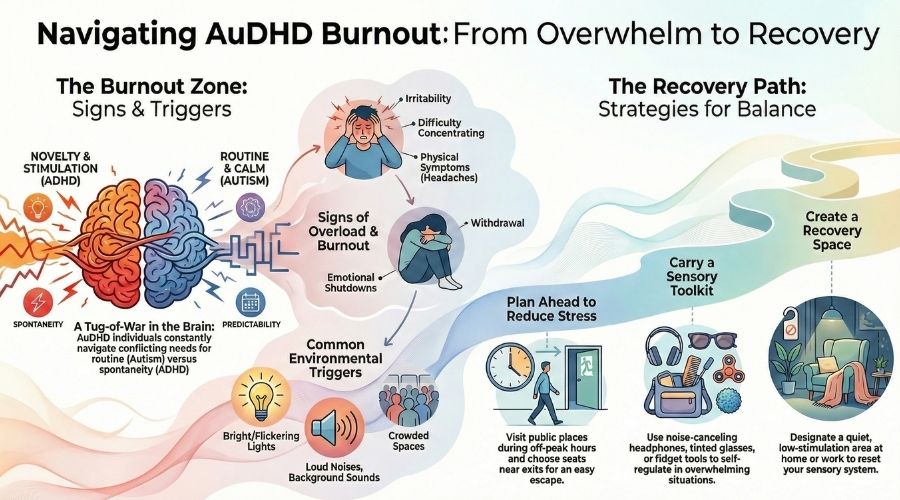
- Irritability or sudden frustration in busy environments.
- “Brain fog” or difficulty processing simple information.
- Physical symptoms like headaches or dizziness.
- A strong urge to withdraw or “shut down.”
Navigating ADHD Burnout Recovery
Recovering from this kind of burnout isn’t about trying harder; it’s about finding tools that actually work for your brain.
During my own recovery, I realized standard advice didn’t work. I needed a completely different approach to my energy and sensory needs. That is why I built The Dopamine Hub—to share the specific tools that saved me.
1. The Dopamine Menu
When you are burnt out, “finding joy” feels like another chore. A dopamine menu is a tool that helps you spark motivation without the decision fatigue. It lists activities that provide safe, accessible sources of dopamine so you can recharge without the guilt.
The Dopamine Menu
🥗 Starters: Quick Hits (5-10 mins)
Quick boosts to initiate a transition between tasks.
- Drink a glass of cold water
- Do 10 jumping jacks
- Pet the dog/cat
- Listen to one favorite song
🥘 Mains: Deep Focus
Activities that get you into a flow state.
- Working on a creative hobby
- Gardening / Repotting plants
- Reading a physical book
- Puzzle solving
🍞 Sides: Enhancements
Things that make the “Mains” better.
- Lighting a scented candle
- Using noise-canceling headphones
- Putting on “comfy clothes”
- A warm cup of tea/coffee
🍰 Desserts: Treats
High dopamine reward, but consume in moderation!
- Scrolling social media
- Binge-watching a TV show
- Online shopping browsing
- Playing mobile games
2. The Sensory Safety Checklist
Sometimes burnout is actually sensory overload in disguise. I’ve put together a checklist to help you build a sensory diet—a personalized plan to manage your sensory inputs and keep you regulated before you hit the point of no return.
Sensory Safety Checklist
👀 Visual (Sight)
Reduce overwhelm from bright lights or visual clutter.
- Wear sunglasses (even indoors)
- Turn off overhead lights; use lamps
- Install f.lux or "Night Shift" on screens
- Use a sleep mask for 10 minutes
👂 Auditory (Sound)
Manage noise sensitivity or seek soothing rhythms.
- Active Noise Cancelling (ANC) headphones
- Listen to Brown Noise or Pink Noise
- Loop earplugs (to reduce decibels)
- Create a dedicated "Safety Playlist"
🖐️ Tactile (Touch)
Soothe the system through texture and pressure.
- Change into "soft clothes" immediately
- Use a weighted blanket or lap pad
- Pet an animal (co-regulation)
- Take a warm bath or shower
🌪️ Movement (Vestibular)
Regulate arousal levels through rhythmic movement.
- Slow rocking in a chair
- Swinging (hammock or park swing)
- Gentle bouncing on a yoga ball
- Push against a wall with both hands
A Final Note
Understanding your unique sensory needs is a powerful act of self-care. Living with AuDHD and managing sensory overload can be challenging, but it doesn't have to define your life.
By recognizing your triggers and using practical coping strategies like a sensory diet, you can create a daily life that feels more predictable, comfortable, and aligned with your needs. You have the power to shape your world to better suit you.
Recommended Reading & Resources related to AuDHD, ADHD and Neurodivergent Burnout
Articles & Guides
- The Autistic Advocate (Kieran Rose)
- Note: This is widely considered one of the best comprehensive guides on the subject.
- Neuroclastic
- Note: A fantastic neurodivergent-led publication with deep insights.
- ADDitude Magazine
- Note: Great specifically for the ADHD side of the experience.
Charities & Organizations (UK Based)
Authors to Follow
- Dr. Devon Price: Author of Unmasking Autism.
- Pete Wharmby: Author of Untypical (Great for understanding the sensory environment).
- Dr. Luke Beardon: A leading expert on autistic anxiety and safety.